Every year, around late August, something predictable happens in Indian households: someone looks at their living room, sighs, and says “Diwali is coming, this sofa has to go.” Multiply that sigh by a few million homes across North and Central India, and you get one of the most reliable demand spikes in the entire home interior industry — the pre-festive renovation rush.
If you run an interior or modular kitchen business, you already feel this every year. What’s less obvious is how many brands still treat it like a surprise, scrambling in October instead of preparing in August. This post is about not being that brand.
Why the Festive Season Is Genuinely Different (Not Just Marketing Hype)
This isn’t a made-up “buy now” sales gimmick — the pattern is backed by real numbers. India’s interior design market was valued at roughly $36.89 billion in 2025 and is projected to nearly double to $74.73 billion by 2034, growing at over 8% a year. A meaningful chunk of that annual demand concentrates in the months before Diwali, when homeowners want their spaces “guest-ready” — new modular kitchens, fresh paint, updated living rooms — before relatives start showing up uninvited with opinions about your curtains.
North India alone accounted for nearly 40% of the country’s interior design market share in a recent year, which — if you’re reading this from Ranchi, Delhi, Lucknow, or anywhere in the North-Central belt — is basically your market telling you it’s already primed and waiting.
The Mistake Most Brands Make: Waiting Until the Rush Actually Starts
Here’s the uncomfortable pattern we see every single year: brands ramp up their marketing during the festive season, when every competitor is doing the exact same thing, ad costs spike because everyone’s bidding for the same eyeballs, and homeowners are already comparing five quotes because — surprise — everyone reached out to them at once.
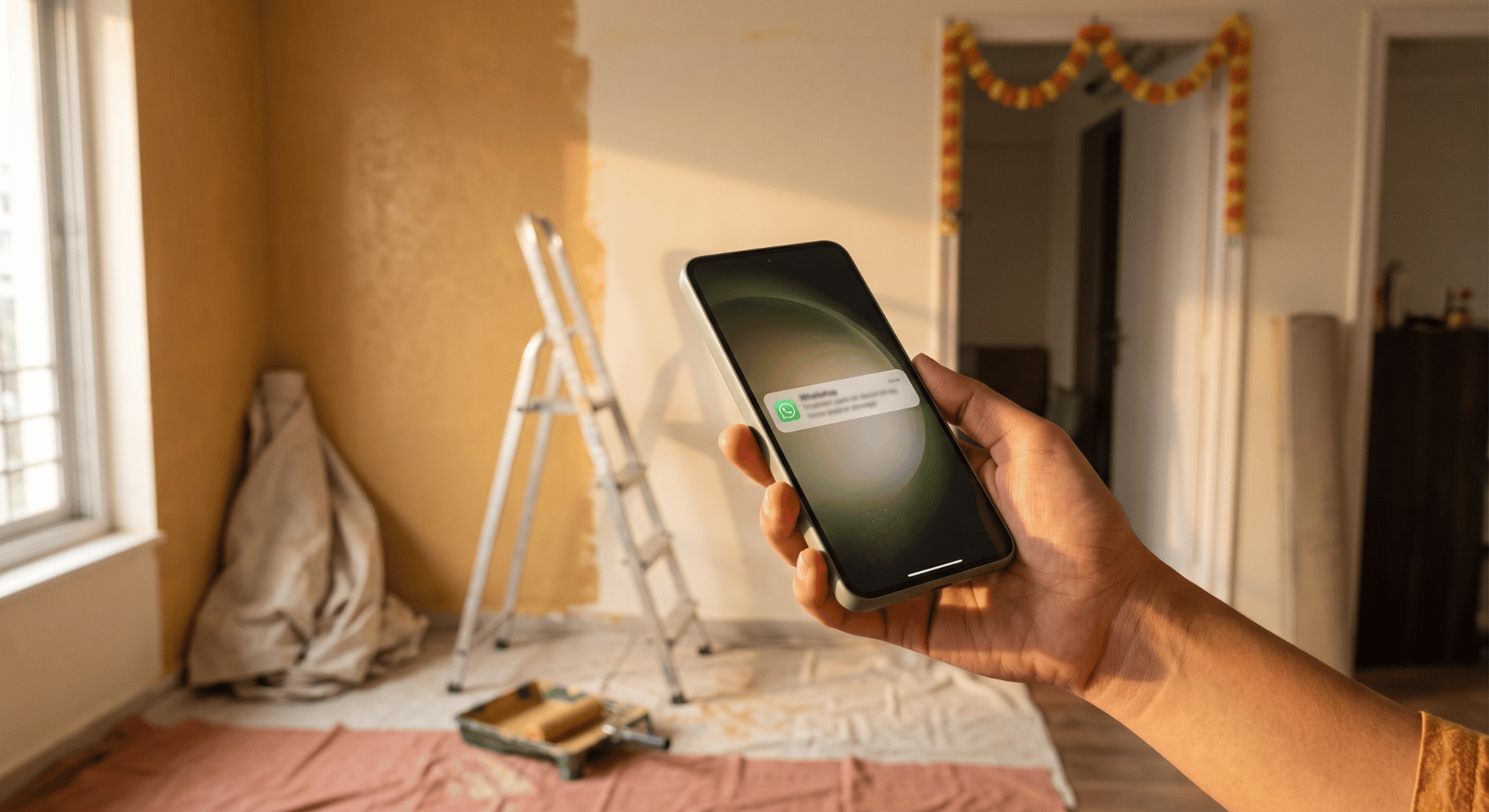
The brands who actually win the festive season aren’t the ones shouting the loudest in October. They’re the ones who quietly started building their pipeline in August, so that by the time the “let’s get this sofa sorted” panic sets in, they’re already the first name in a homeowner’s WhatsApp, not the fifth.
What Preparing Actually Looks Like (Practically, Not Vaguely)
1. Start your campaigns before the rush, not during it. If you wait until September or October to launch festive-focused campaigns, you’re paying premium ad rates in a crowded auction. Starting in August means lower costs, less competition, and a head start on building a lead list before your competitors even wake up to the season.
2. Set expectations on timelines honestly. A homeowner planning a modular kitchen makeover for Diwali needs to start now, not three weeks before the festival — real renovation work takes time. Brands that communicate this clearly build trust and also naturally filter out people who were never going to move fast enough to be a realistic client this season anyway.
3. Don’t let a good lead go cold because you’re swamped. Festive season means volume — more enquiries, more site visits, more quotes to send out. This is exactly when slow response times cost the most, because a homeowner in a hurry won’t wait around for your reply the way they might in a quieter month. (We wrote a whole piece on this — the brand that replies first still wins, and it matters even more here.)
4. Make your festive-specific offer genuinely clear. If you have a “book before September, get priority scheduling” type offer, say it plainly, once, in your ads and your WhatsApp responses — not buried in a PDF brochure nobody reads. Clarity converts better than cleverness.
A Quick Reality Check
Not every homeowner planning a festive renovation has a realistic budget or timeline, and that’s fine — you don’t need every lead, you need the right ones. This is exactly why proper lead qualification matters more during a high-volume season, not less. More enquiries without filtering just means more time spent explaining to someone why their ₹40,000 budget doesn’t stretch to a full modular kitchen in six weeks (we’ve all had that call).
Frequently Asked Questions
When should interior brands start festive-season marketing in India? Most brands see the strongest return by starting campaigns in August, roughly 8–10 weeks before Diwali, well ahead of the crowded September–October rush when ad costs typically rise.
Why does the festive season matter so much for interior and modular kitchen businesses? Home renovation demand in India spikes significantly in the months before Diwali, as homeowners prepare their spaces ahead of festivities and family visits — making it one of the highest-intent buying windows of the year for the industry.
Does a bigger festive-season lead volume automatically mean more business? Not on its own. Without proper qualification, a spike in enquiries just means more time spent on unqualified conversations. Volume only helps if it’s paired with a system that filters for genuinely ready, budget-fit clients.
Want your festive season pipeline sorted before the rush hits? Book a free strategy call and we’ll map it out with you.
Growprofyts India helps home interior and modular kitchen brands across India turn ad spend into qualified, ready-to-talk clients.