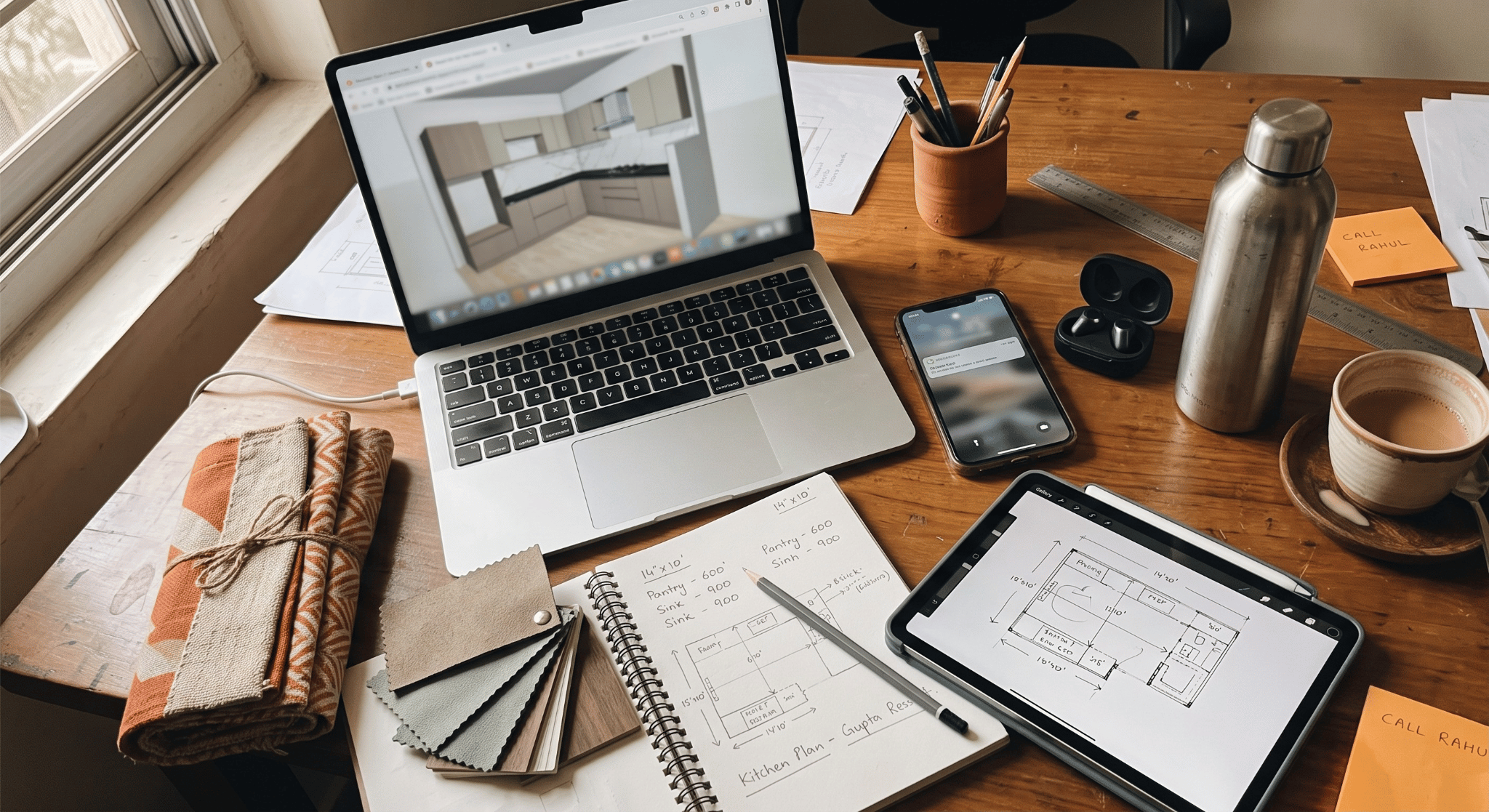
There’s a very specific kind of despair that hits when you’re standing in a 600 sq ft flat trying to figure out where a dining table, a study corner, and your mother-in-law’s visiting suitcase are all supposed to go at the same time. If you’ve felt this, welcome — you’re in extremely good company. Most of urban India is living this exact puzzle right now, and 2026’s design trends have actually gotten quite good at solving it.
The good news: small doesn’t have to mean cramped, and it definitely doesn’t have to mean choosing between “looks nice” and “actually functions.” Here’s what’s genuinely working in Indian apartments this year — not vague Pinterest inspiration, but practical ideas you can actually act on.
The Big Shift: From “Fitting Things In” to “Invisible Storage”
For years, small-space design in India meant one thing: more shelves, more boxes, more visible organization systems that, ironically, often made a room feel busier rather than calmer. The 2026 approach flips that entirely — the goal now is storage you can’t even see.
Think floor-to-ceiling wardrobes finished in the same color as the wall, drawers built directly into staircases (a genuine favorite in duplex and loft-style flats), and what designers have started calling “cloffices” — a closet and home office quietly combined into one closed unit that disappears when you’re not using it. The point isn’t just saving space; it’s reducing what designers call “visual weight” — the mental clutter of seeing storage everywhere, even when it’s tidy.
Multi-Functional Furniture Is No Longer a Compromise
A few years ago, foldable and multi-purpose furniture had a slight “budget option” reputation attached to it. That’s changed. In 2026, a well-designed Murphy bed, an extendable dining table, or a modular sofa that converts into a workspace isn’t a compromise — it’s often the smarter, more design-forward choice, even for homeowners who could technically afford separate furniture for each function.
A few pieces genuinely worth prioritizing in a compact Indian home:
- A Murphy bed for a guest room that also needs to be a home office or nursery on any given day
- A slim shoe cabinet (some newer designs go as narrow as 17 cm deep) that fits in entryways standard cabinets simply can’t
- A rotating countertop organiser for kitchen or bathroom clutter — small, but it genuinely changes how usable a tight counter feels
- Nesting or stackable side tables that expand only when you actually need the surface
Color, Light, and the Return of “Warm” Over “Stark”
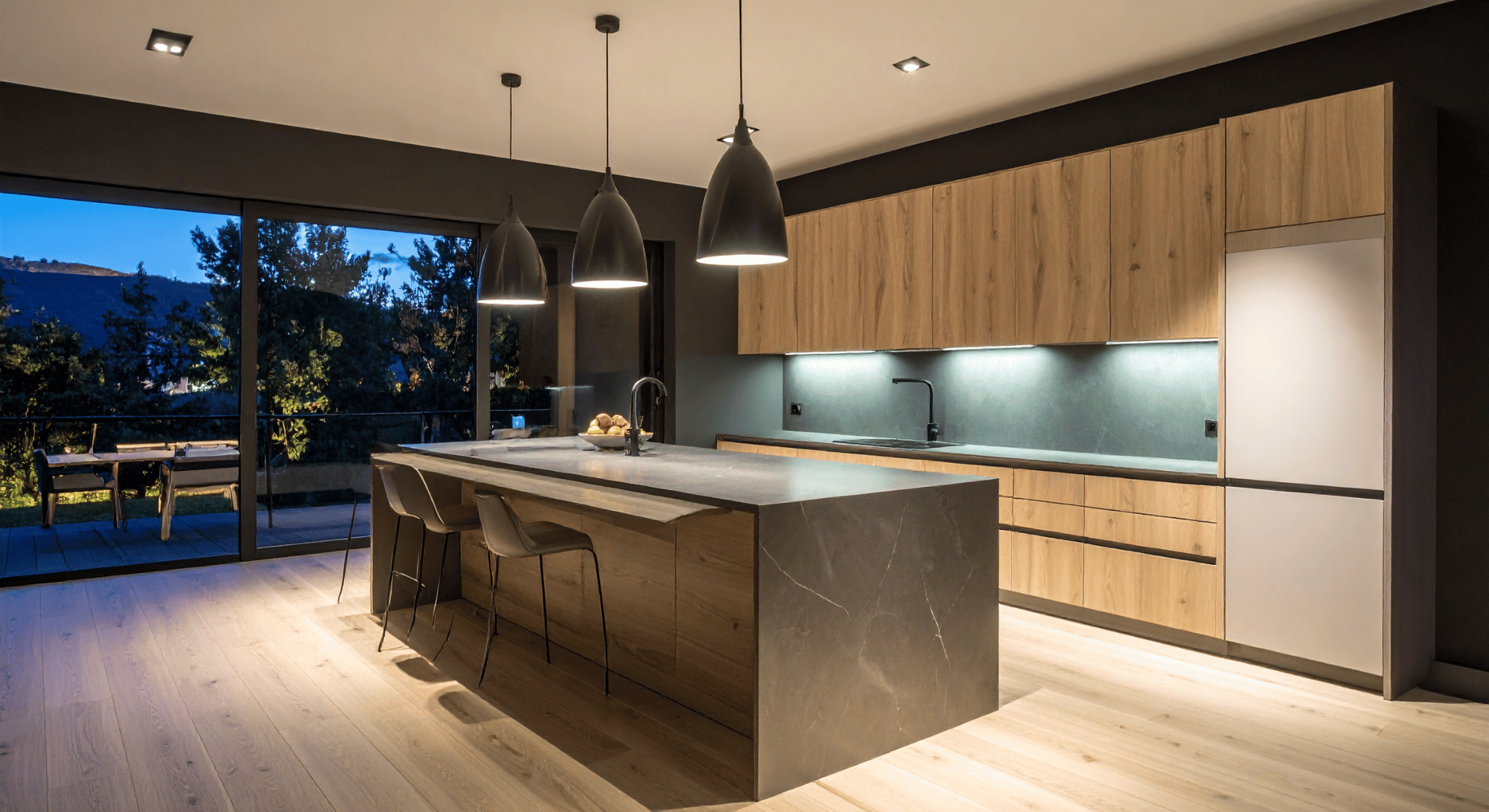
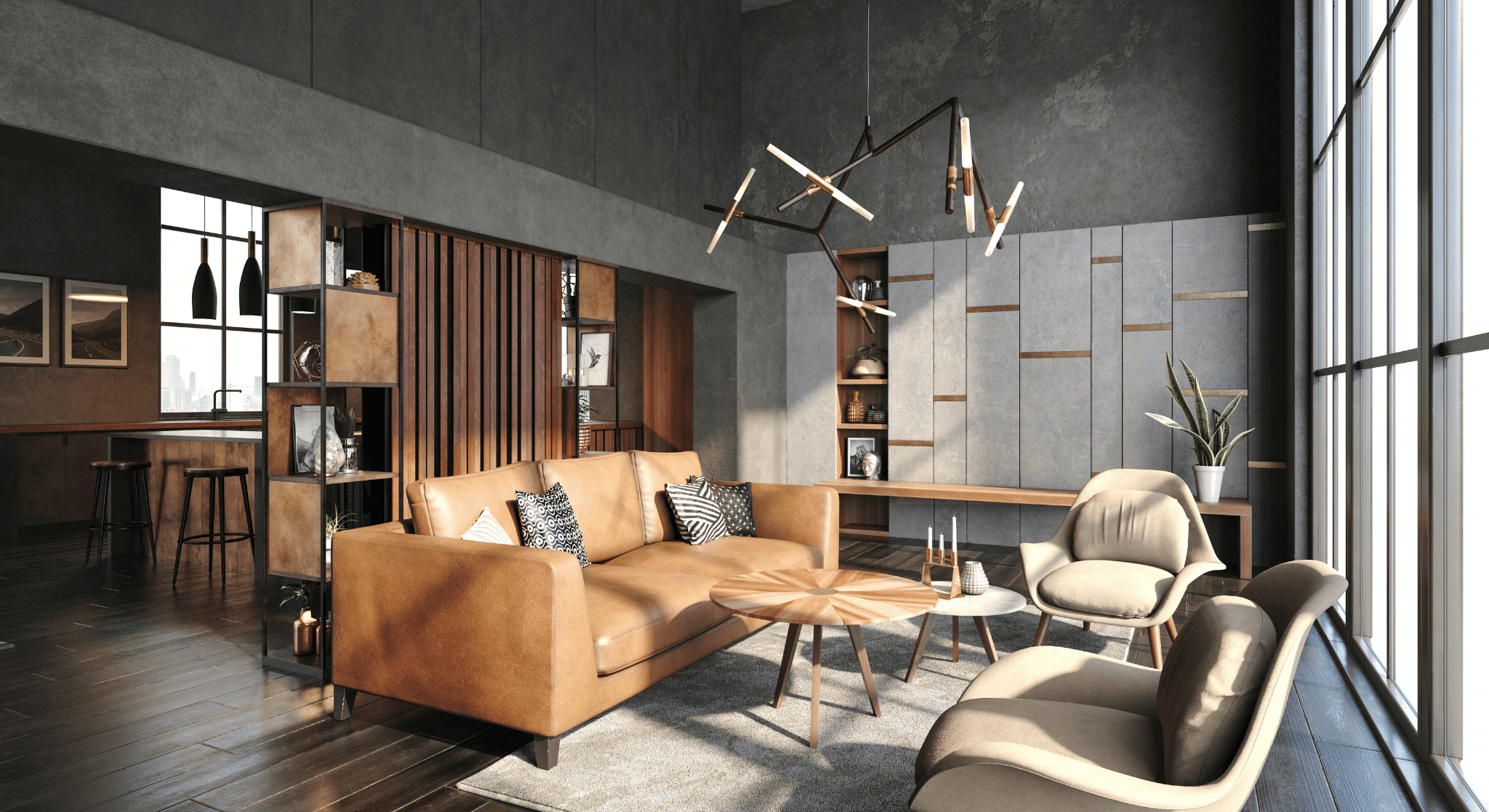
If you decorated your home in the last few years leaning heavily into cool greys and stark whites — you’re not alone, and also, that trend is fading. 2026 is firmly in “warm minimalism” territory: soft beige, clay, warm greys, and muted earthy tones that make a small room feel gentle rather than clinical.
This matters more in small spaces than large ones, because a cold, stark small room tends to feel emptier and less inviting, while a warm-toned small room tends to feel cozy and intentional — the same square footage, a completely different emotional read.
A genuinely underused trick worth reviving: mirrors. Not as a decorative afterthought, but placed deliberately — behind a sofa, opposite a window, on a wardrobe face — to visually double a room’s sense of depth. It sounds almost too simple to matter, and yet it consistently shows up as one of the highest-impact, lowest-cost changes for making a small room read as bigger.
Don’t Ignore the Balcony (Seriously)
One of the more interesting shifts in Indian apartment design this year is how much attention balconies and semi-open spaces are getting. Rather than treating a balcony as leftover space for drying clothes and forgotten flowerpots, more homeowners are converting these transitional zones into reading corners, small meditation spaces, or plant-filled nooks using folding partitions and weather-resistant furniture.
For a flat where every interior room is already stretched thin, this is genuinely one of the highest-value moves available — you’re not fighting for space inside four walls, you’re unlocking space you already own but weren’t using.
What’s Fading Out (So You Don’t Waste Money On It)
Not every past trend deserves to survive into 2026:
- All-grey interiors are steadily losing ground to warmer palettes
- High-gloss and mirror-finish gold is being replaced by brushed, aged metal finishes
- Maximalist clutter and “showroom perfect” staging are on the way out — homes are meant to look lived-in now, not like a furniture catalogue nobody actually sits in
If your interior brand’s marketing photos still lean heavily into any of these, it might be worth a refresh — not because they’re “wrong,” but because they’re increasingly reading as dated to the exact homeowners you’re trying to reach.
Frequently Asked Questions
What is the best interior design approach for a small apartment in India in 2026? Warm minimalism combined with invisible, built-in storage and genuinely multi-functional furniture tends to work best — the goal is reducing visual clutter while making every piece of furniture earn its place, rather than simply fitting more items into a small footprint.
Do mirrors actually make a small room look bigger, or is that just a decorating myth? Strategically placed mirrors — particularly opposite a window or behind key furniture — do meaningfully increase a room’s sense of depth and light, making it a low-cost, high-impact addition for compact spaces.
Is balcony conversion a worthwhile investment for small Indian apartments? For most compact flats, converting an underused balcony into a functional space (reading nook, small workspace, plant corner) is one of the more cost-effective ways to add genuine livable area without any structural renovation.
If you’re an interior brand helping homeowners solve exactly these problems, make sure your marketing is reaching them at the right moment. Book a free strategy call and let’s talk about your lead pipeline.
Growprofyts India helps home interior and modular kitchen brands across India turn ad spend into qualified, ready-to-talk clients.